
The Real Challenge: Where Does It All Go?
Here's what happens in most British homes come September. You pull out the winter coats, jumpers, and thermal layers. But where do the summer clothes go? If you're living in a terraced house without an attic or a spare room, you're looking at a real puzzle. Most people just shove everything in the back of their wardrobes and hope for the best.
That's not really a system though. It's just... chaos. You'll spend fifteen minutes hunting for a specific sweater, only to find it's been crushed under winter boots. Plus, you're wasting precious wardrobe space on clothes you won't wear for months.
Quick Reality Check
The average person wears only about 20% of their wardrobe regularly. The other 80% just takes up space. When you're rotating seasonally, you can use that dead space for off-season storage instead.
Three Storage Solutions That Actually Work
You don't need fancy solutions. You need practical ones. We've tested these in actual small bedrooms and they work without turning your home into a storage facility.
1. Under-Bed Storage Boxes
This is the most reliable option for most people. Get shallow, flat storage boxes that slide under your bed. They're not glamorous but they work. You'll fit roughly 3-4 seasons worth of off-season items under a standard double bed. Label them clearly — "Winter Coats", "Summer Dresses" — so you're not rummaging about in July looking for your favourite cardigan.
2. Over-Door Organisers
Those fabric hanging organisers that go on the back of your bedroom door? They're surprisingly useful. You can fit about 20-30 items in them depending on thickness. Perfect for thinner off-season items like t-shirts, lightweight jumpers, or gym gear you're not using right now. They're accessible but out of the way.
3. Vacuum Storage Bags (With Caution)
Yes, they save space. But don't vacuum down delicate fabrics or anything with elastic. Wool jumpers? Fine. Stretchy leggings? Leave them. The compression can permanently damage the fibres. They're best for bulky winter coats and down jackets — the things that take up the most room anyway.


The Rotation System: Making It Simple
Don't overthink this. You'll need four simple steps, and you'll spend maybe an hour twice a year doing the swap.
Pull Everything Out
Get all your current season clothes out and lay them on your bed. Yep, all of them. It's chaotic but you'll see what you're actually wearing.
Fold and Box
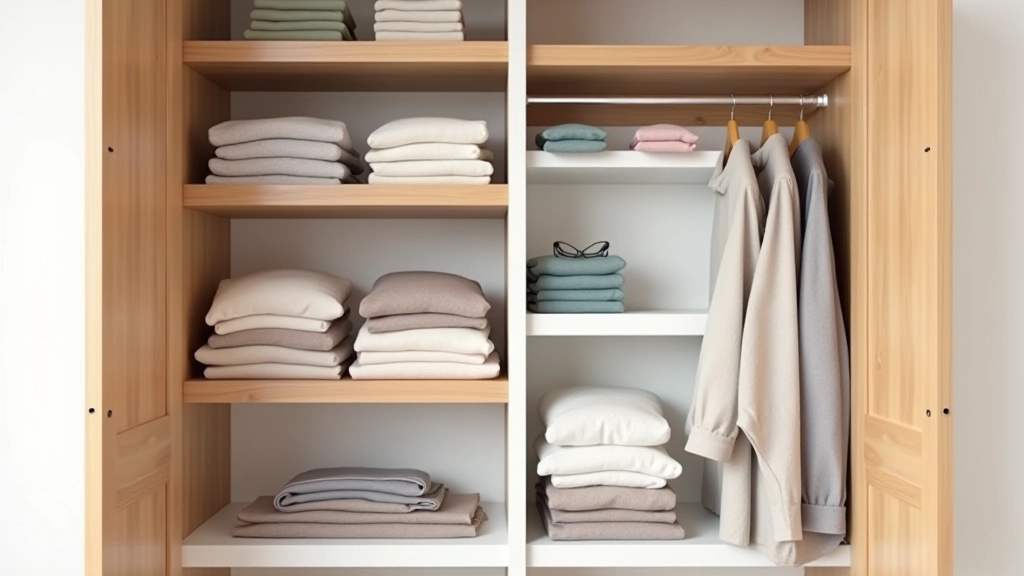
Fold everything neatly — yes, that takes time but organized storage stays organized. Put each season's items in a labeled box. Use the vertical folding method so you can see everything without digging.
Store Safely
Put off-season boxes in your chosen storage spot — under the bed, in the wardrobe's upper shelves, or that cupboard under the stairs. Keep them dry and away from direct sunlight.
Rotate Every Season
Four times a year, swap them out. Mark it on your calendar if you need to. By March, your summer box comes out. By October, winter's back.
Maximize Your Wardrobe Space: The KonMari Approach
Before you start rotating, it's worth doing a proper cull. You can't organize things you don't need. The KonMari method works well here because it's not about getting rid of everything — it's about keeping what actually brings you joy or serves a purpose.
Go through each item and ask: Would I buy this again right now? If the answer's no, it goes. You'd be amazed how much space you free up. Most people find they can eliminate 30-40% of their clothes without missing anything. That's space you can now use for better organization instead of hoarding.
"The goal isn't to have less stuff. The goal is to have the right stuff. Once you're only keeping clothes you actually wear, seasonal rotation becomes effortless because you're not managing clutter — you're just organizing what matters."
Handling the In-Between Seasons
Spring and autumn are tricky because the weather can't decide what it wants. You'll need layers accessible but not taking up half your wardrobe. This is where transition boxes help.
Keep your lightweight jumpers, cardigans, and denim jackets accessible during those months. They bridge the gap between seasons. You don't need full rotation here — just have them in the front of your wardrobe instead of buried. When May arrives and temperatures settle, pack them away with the winter stuff.
Real talk: It'll take 3-4 rotations before you figure out what actually needs to be stored versus what you wear year-round. Your first time, you might over-pack the storage boxes. By year two, you'll know exactly what goes where and you'll do it in 45 minutes flat.

The Bottom Line
Seasonal wardrobe rotation isn't complicated. It's just intentional. You're choosing to store clothes properly instead of letting them take over your bedroom. You'll have easier mornings because you're only looking at clothes you actually wear right now. Your favourite winter coat won't be crushed. And you'll free up about 40-50% of your wardrobe space just by rotating smartly.
Start this season. Pick a system that fits your space — under-bed boxes are usually the safest bet for terraced houses. Give it two rotations before you decide if it's working. Most people find it transforms how they feel about getting dressed.